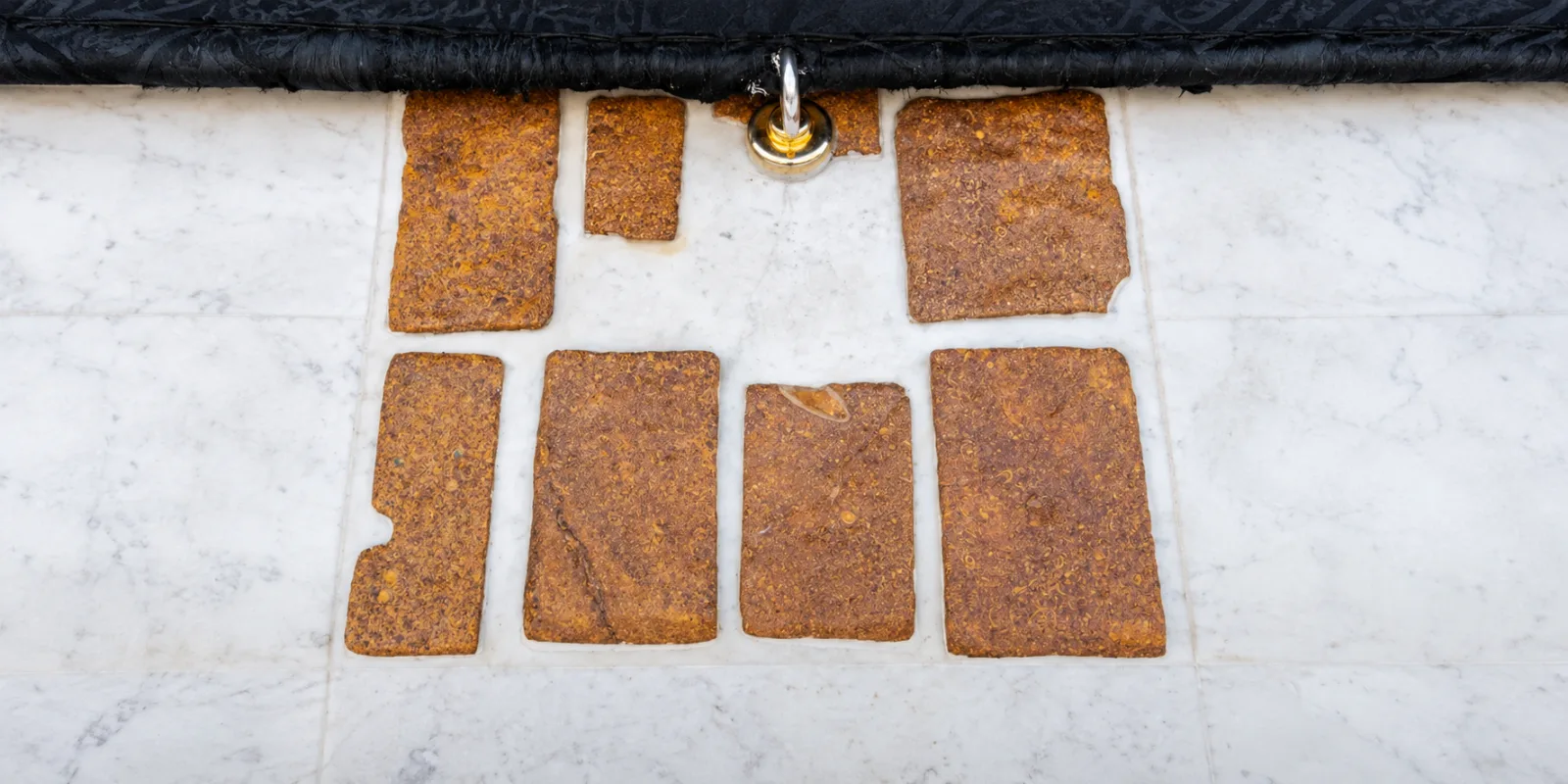
Beside the door of the Kaaba, on its right side, are eight distinctive stones, traditionally known as Mary Stone. They are said to have been placed during the time of Caliph Abu Ja'far al-Mansur in 631 AH.
This place is known as Musalla Jibreel, as it marks the approximate location where Jibreel عليه السلام taught Prophet Muhammad ﷺ the times of Salah.
Abdullah ibn Abbas رضي الله عنهما narrated that Jibreel عليه السلام led the Prophet ﷺ in prayer at the Kaaba on two occasions.
On the first day, he demonstrated the earlier time of each prayer. On the following day, he demonstrated the later time. Afterward, Jibreel عليه السلام said:
“O Muhammad, this is the time observed by the prophets before you, and the time is anywhere between these two times.”
The narration explains the timings of the five daily prayers through the signs of the sun, shadows, twilight and dawn.
Interestingly, although the five daily prayers as a collective obligation were prescribed specifically for the Ummah of Muhammad ﷺ during Isra and Mi'raj, scholars explained that individual prayer times had already been prescribed to earlier prophets.
So these eight stones mark a place connected to a profound moment in the history of Salah: where Jibreel عليه السلام taught the Messenger of Allah ﷺ the appointed times of prayer.