Historical Places
Al-Masjid an-Nabawi
Madinah
After the Hijrah, upon reaching Madinah, the Messenger of Allah ﷺ himself worked alongside the Companions to build this mosque. At first, it was a simple structure made of date-palm trunks and leaves, and its floor was of earth. The mosque was not merely a place of prayer—it was also the centre from which education, judicial affairs, and state administration were conducted, while the Ashab al-Suffah lived on one side of it. After the passing of the Messenger of Allah ﷺ, he was buried in the chamber of Aishah (may Allah be pleased with her), which was incorporated into the mosque during a later expansion; the graves of Abu Bakr and Umar (may Allah be pleased with them) are also located there. Hadiths mention the special virtue of praying in this mosque. Having been expanded many times, from the era of the Rightly Guided Caliphs to the present Saudi era, it can now accommodate hundreds of thousands of worshippers.
More places in Madinah
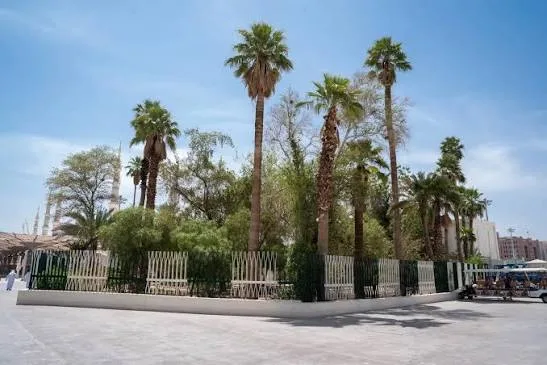
Saqifah Banu Sa'idah
A place located near the Prophet’s Mosque, where, after the passing of the Messenger of Allah ﷺ, the Companions gathered and pledged allegiance to Abu Bakr (may Allah be pleased with him).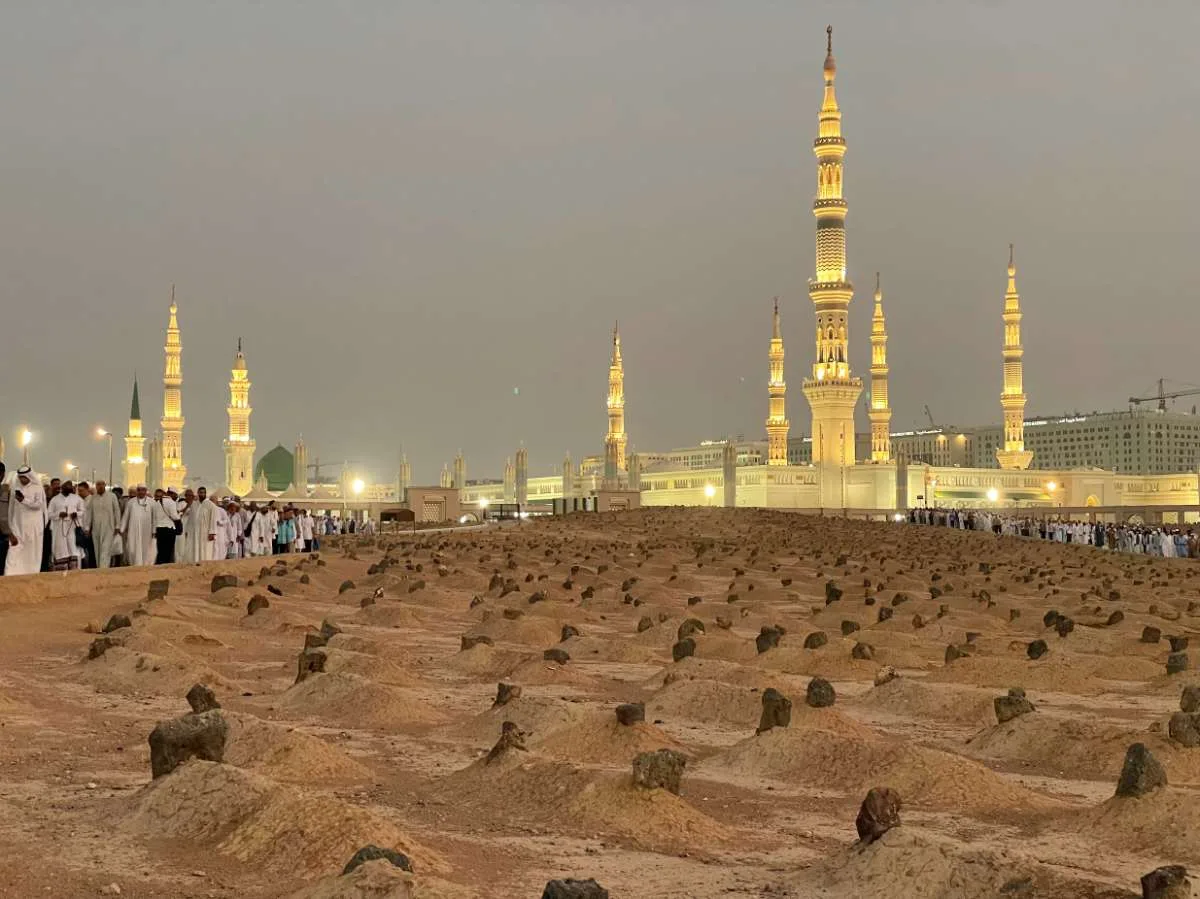
Al-Baqi Cemetery
The main cemetery of Madinah, located on the eastern side of Al-Masjid an-Nabawi, where many Companions and members of the family of the Messenger of Allah ﷺ are buried.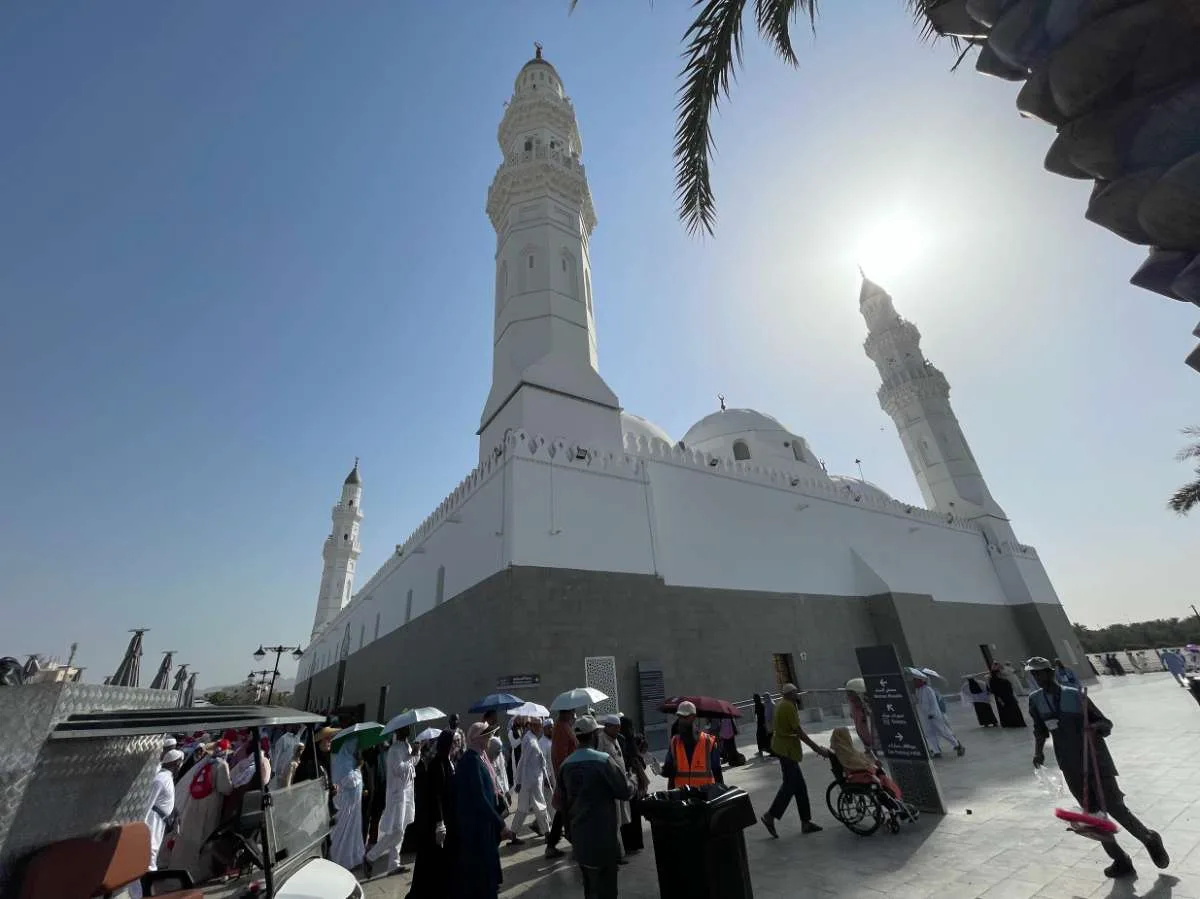
Quba Mosque
The first mosque in Islam, located south of Madinah, whose foundation the Messenger of Allah ﷺ laid with his own hands on the journey of Hijrah.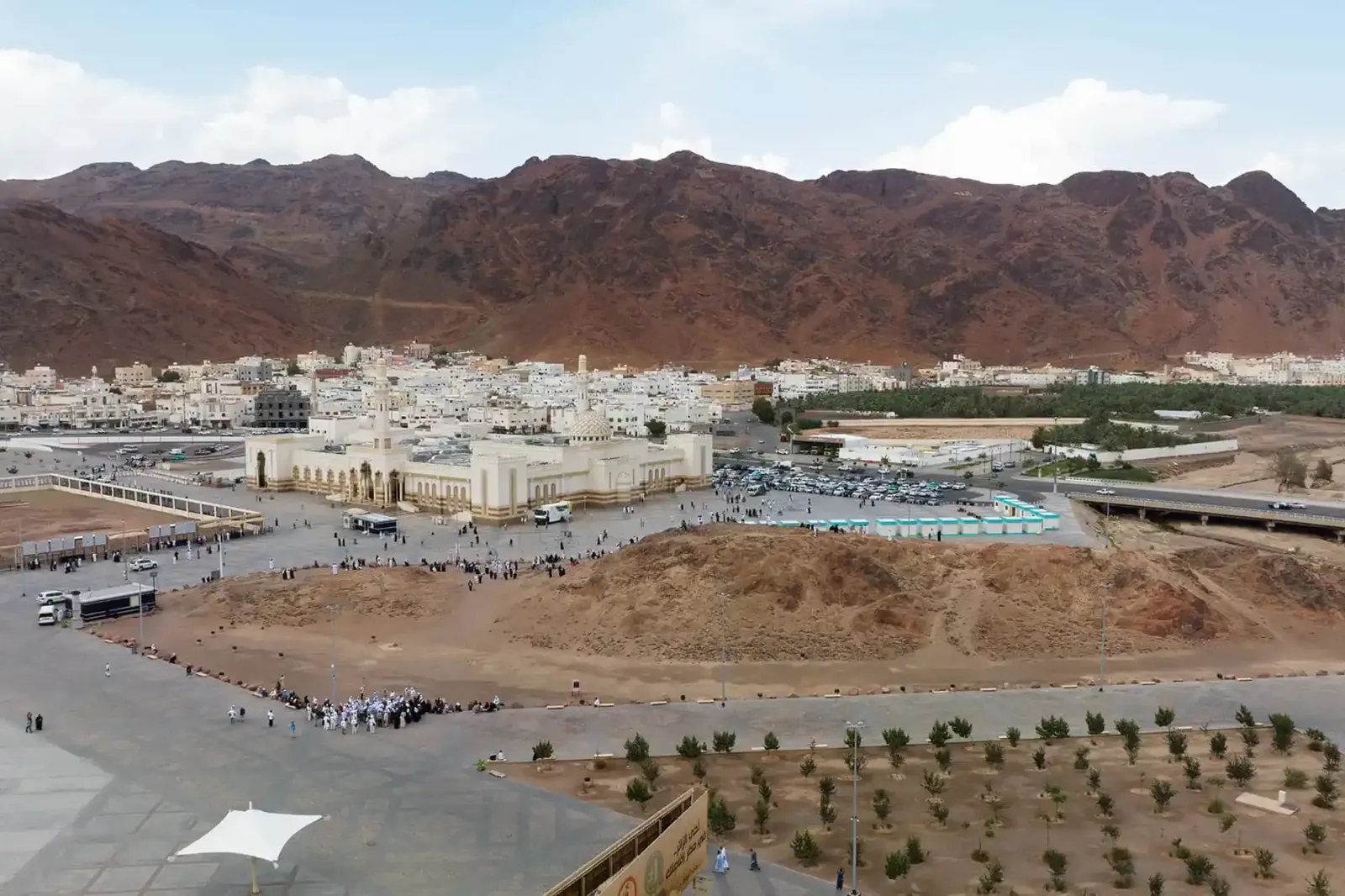
The Plain of Uhud and the Cemetery of the Martyrs
The plain situated north of Madinah at the foot of Jabal Uhud, where the Battle of Uhud took place in the third year of the Hijrah and the martyrs were buried.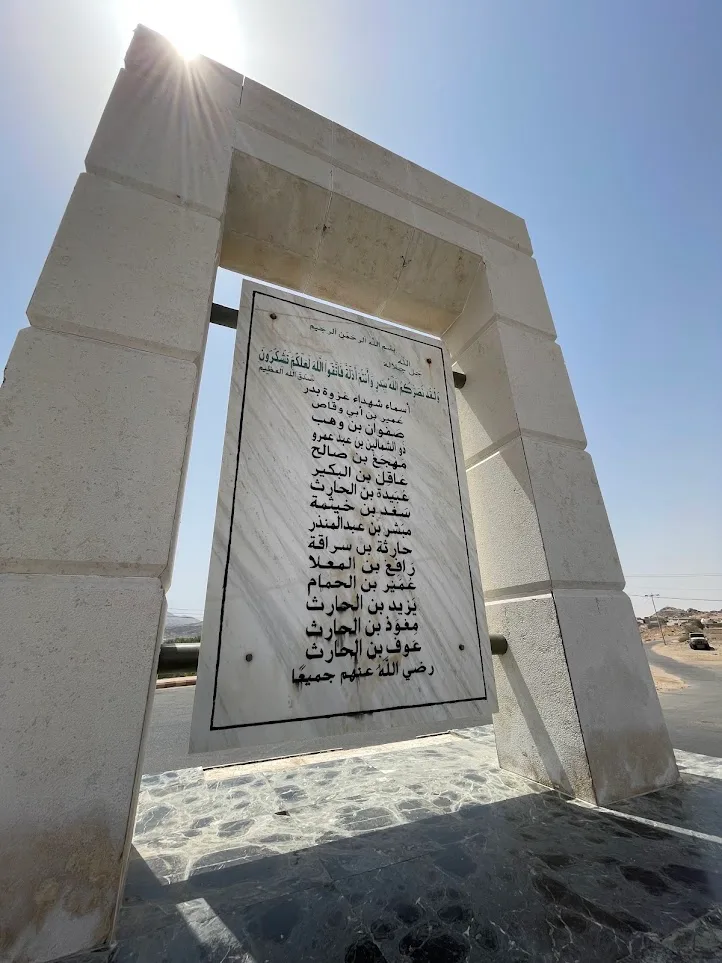
The Plain of Badr and the Cemetery of the Martyrs
A settlement located southwest of Madinah, where the Battle of Badr, the first major battle in Islam, took place in the second year of the Hijrah.